If you work as part of a team, this scenario is familiar to you: a meeting where there is little agreement on the details of a plan and many proposals on how to do it “my way.”
Oftentimes the discussions lose sight of the goal and confound the outcome with being right.
The meeting eventually ends, a decision is made, and many pouting faces go back to work disgruntled that their proposal wasn’t picked. To rub salt in their wounds, they’re part of the team that has to put the plan in motion.
Put yourself for a moment in that person’s shoes. What do you do next? Your choice will tell more about you than anything you argued during the discussions.
But before you choose, there’s more for us to take a look at. It may surprise you.
Refusing, Rebuffing, Rejecting
Working on something you think is wrong feels like you’re betraying your own judgment. How can you be convinced that something is inferior, and still work on implementing it? Isn’t it a violation of your professional integrity?
After all, blind compliance has sunk countless products and companies. Those people who nod along to every decision are terrible as advisors, and lousy as managers.
Yet, there is an uneasy feeling. Something that is missing. You can’t put a finger on it, but you know that there is an elephant somewhere in the room. Everyone can see it, yet everyone, you included, chooses to ignore it.
The entire issue is based on the assumption that understanding an idea, agreeing with it, and executing it are one and the same thing, when in fact they are entirely distinct. Confusing them is the origin of most of the damage that ensues.
Guilty Until Proven Innocent
“It is the mark of an educated mind to be able to entertain a thought without accepting it.” This phrase is plastered all over the place, and almost always attributed to Aristotle, although he never wrote it. The earliest known mention is in a 1959 book by Lowell Bennion, Religion and the Pursuit of Truth.
Aristotle’s or not, the sentence is still right.
Entertaining a thought means holding it in your head for long enough to understand it. Note that understanding means not to agree or to accept the idea; it means to comprehend it. The litmus test is to restate the thought, in your own words, back to the person, and they would agree with your version. Until you can do that, the notion in your head is only a rough estimate.
The knee-jerk reaction is to hear the first few words, match them to a position you already oppose, and jump straight to delivering the verdict. That is basically judging a book by its cover. It happens, but there are many hideous jackets wrapping wonderful books.
Understanding is a deliberate choice. Agreement is a judgment. Execution is a commitment. They must be kept separate.
Applying the Brakes
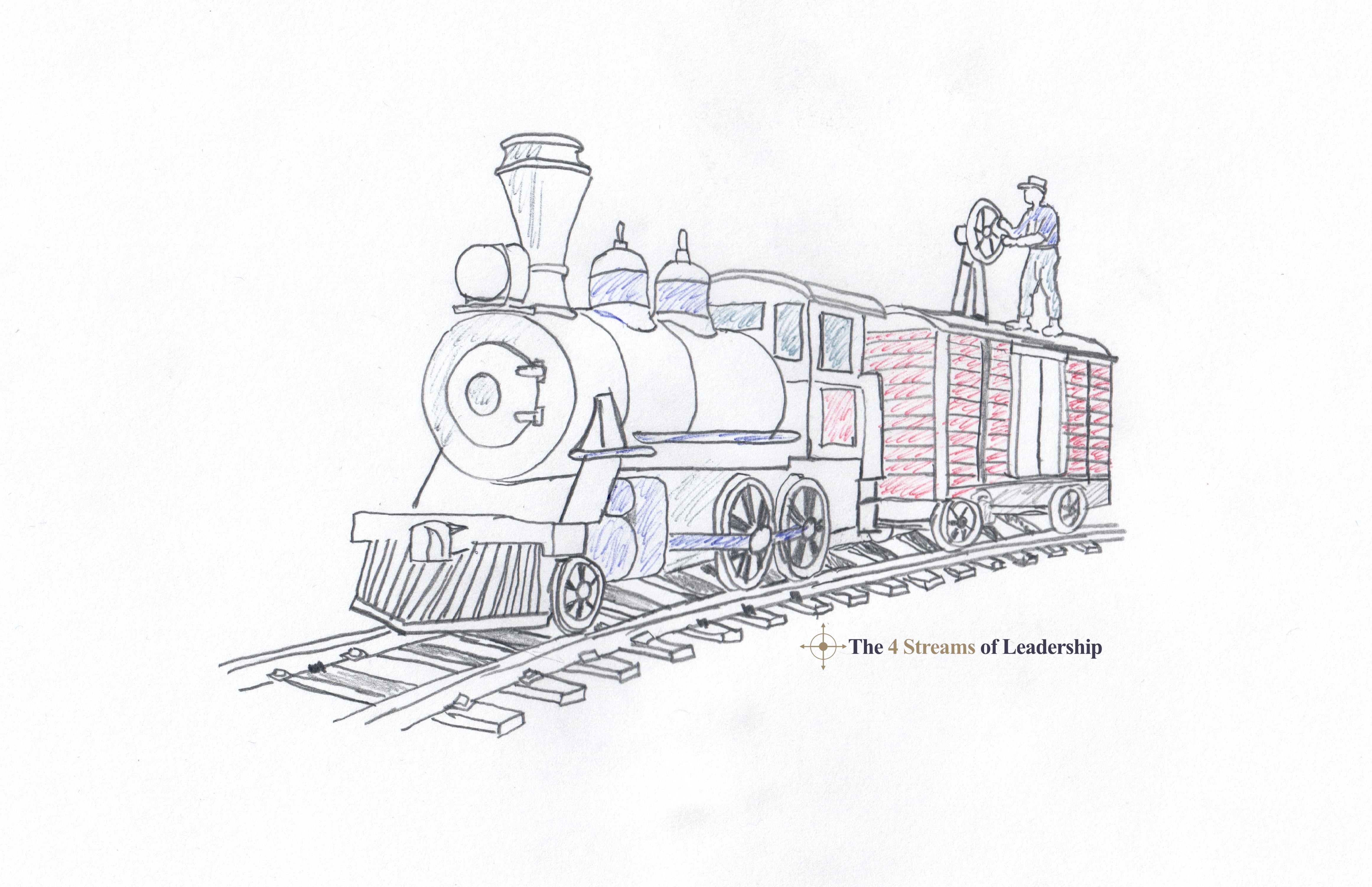
In the second half of the 1800s, it was common to see men walking on the roof of train cars. Rather than trying to ride without paying the fare, they were hard at work. Those were the brakemen. Their job was to walk from car to car and turn the hand-brake wheels.
Then, in 1868, George Westinghouse tested his first air braking system. Others proposed different systems such as chain brakes (W. Loughridge), vacuum brakes (F. Eames), and electric brakes (J. Carpenter). With a quick-action valve and large hoses, Westinghouse’s system matched the results of the others, without wires or chains that could break. In the end, his was the one widely adopted in the U.S.
Westinghouse redesigned his system several times, until he got something that worked reliably. He even changed fundamental working principles such as applying the brakes when the pressure drops, rather than increasing pressure to apply them. His goal was the outcome, rather than being right.
At Work, Everywhere
Entertaining ideas you’d discard is a skill worth mastering, no matter where in the organization you find yourself.
When a stakeholder or a customer makes a call for prioritizing something you don’t agree with, it’s necessary that you understand why the call was made. For example, picture you’re renovating a classic car. You know that wiring needs to be completed before firing up the engine. The shop foreman tells you to stop wiring the headlights and get the engine running. You don’t agree and explain all the reasons why wiring should be completed. Later you learn that the customer needs to take the car to a motorsport event. Had you gone with your plan and finished the wiring, the customer would have missed the race.
In cross-team collaborations, roadmaps and priorities will conflict. Understanding is fundamental to negotiating schedule and scope.
And when team members propose an approach you wouldn’t pick, reactively shutting them down teaches the whole team to stop coming up with ideas.
Creativity, moderation, and execution are activities that fundamentally depend on the ability to honestly entertain different thoughts in your head. Companies are run by people who disagree with decisions, and deliver results anyway.
Saboteurs in Camouflage
The opposite of commitment is omission. It is when you abdicate action when you’re in the position to make a difference. Rebellion and insubordination are different: you’re actively fighting for a different idea.
Those who abandon their responsibility are the ones who cause the most damage, precisely because they’re quiet, exactly because they choose to remain silent, invisible to anyone but themselves.
They drag their feet at work and carefully follow the plan to the letter. They wait until the postmortem to say that they knew it wouldn’t work. Ironically, they also suffer the consequences, yet would do it again.
Being right about something has no value if you stayed passive and allowed it to fail, despite being in a position to make a difference.
Here’s Where You Draw the Line
Let’s get the obvious out of the way. Unethical and illegal things are a hard no. No amount of team spirit is worth it.
The challenge is when there is more than one feasible proposal, but you prefer one of them. You want to give your idea a chance, so where do you stop?
Make your pitch, then listen and understand the other idea. If after truly understanding the other idea your point still stands, then disagree clearly and on the record. After that, commit to the plan and execute it to the fullest.
Disagree once. Doing it multiple times won’t change anything besides creating noise. The decision-maker is already aware of your position; they just chose to take a different path.
If you were right, it will show. If you were wrong, you learned something. Either way, you earn credibility by engaging well in the discussion and by committing to delivering.
Understand first. Judge second. Then deliver. In that order.




Leave a Reply