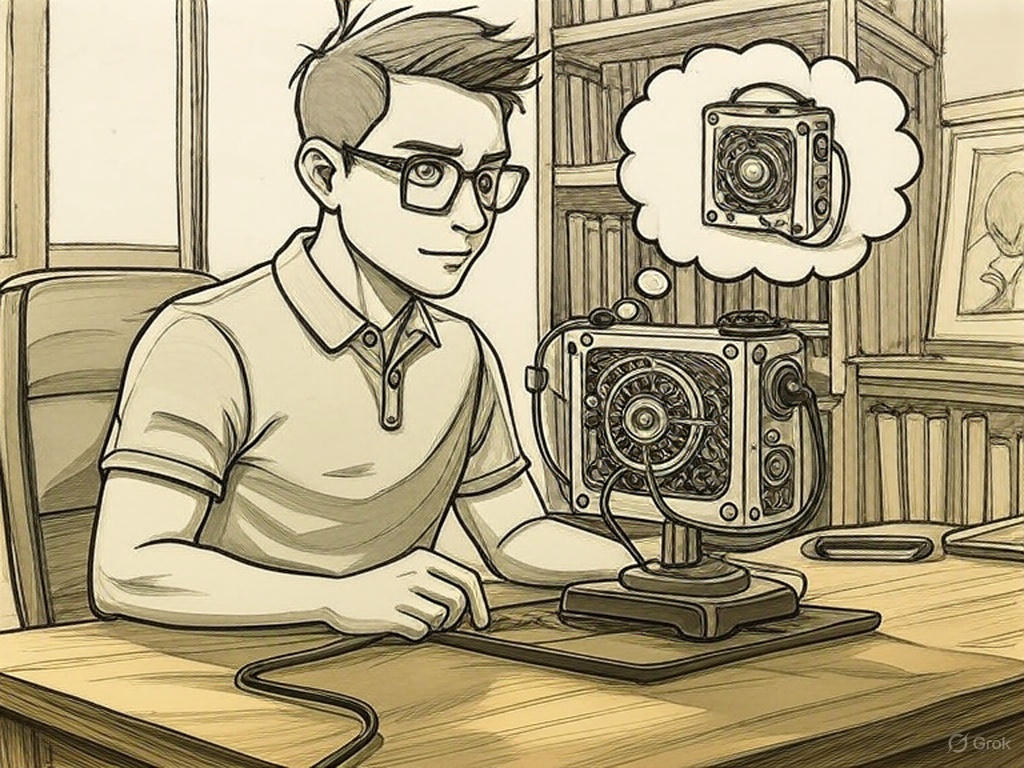
Imagine believing so strongly in the future of a product vision that it feels like a memory. This isn’t just wishful thinking; it’s often a necessary vision that drives you to build what many consider impossible; such “memories” are the spark of innovation. But skepticism, hierarchy, and human nature often stand in the way. To turn your vision into reality, you must believe first, then work to make it happen, overcoming technical obstacles, resistance from doubters, and adopting an essential mechanism for error correction: criticism.
Conviction
Most people are skeptics and will offer a dozen reasons why your idea won’t work: the market’s too crowded, the tech’s unproven, the budget’s too tight. People have a human desire to be right, but often their resistance comes from projecting a future based on past circumstances. Some would rather see a project fail, proving their foresight, rather than risk accept something new, outside their field of view. Worse, they may subconsciously sabotage progress, not out of malice but because your vision of the future is different than theirs.
Consider the early days of Amazon and SpaceX. Bezos and Musk pitched radical ideas at the time: “The Everything Store” and “Reusable Rockets.” I can only imagine the reactions they got from many investors raising an eyebrow and passing on the investment. Yes, Bezos and Musk went on to redefine shopping and space flight. Their belief drove them to build the future that already existed in their heads. It was more than a vision; it was already a memory.
Your memory of the future works the same way. But it must be a disciplined belief, not blind optimism. You self-impose a routine and a sense of urgency to bring it to existence. This is true whether you’re launching a startup or pitching a project at a Fortune 500 company.
Navigating turbulent waters
Skeptics demand certainty that doesn’t exist, definitions not yet formed, or specificity still undefined, hampering enthusiasm with vague objections. If the criticism of a skeptic undermines your team, act decisively. First, address the skeptic’s claims with the team. Then, if warranted, have an honest conversation with the skeptic. They may not mean it intentionally, but the collateral effect of such negativity is to discredit the future you’re working toward.
The challenge is especially difficult when the skeptic is upstream from you and pulls rank. A cautious manager, driven by budget constraints or ego, may block progress. Hierarchy alone can stall your efforts, leaving you with two options: abandon or escalate. The former can be demoralizing but necessary. The latter can be risky and unavoidable.
If you escalate, beware that you may prove your superior wrong, inviting retaliation such as poor performance reviews, holding off of promotions, and even termination. To navigate this, be diplomatic and build bridges. Seek the help from others who share your vision and speak with a collective voice, show that your vision aligns with company goals, and that you’re not bypassing authority.
Accept criticism, reject negativity
A culture of criticism is not only vital, it’s the best-known mechanism for error correction, as physicist David Deutsch and philosopher Brett Hall argue. Without it, we lose the feedback needed to course correct and refine ideas. But be on your guard since not all criticisms are equal. Constructive criticism seeks to improve; negativity seeks to tear down. Pay attention to the former and filter out the latter.
Some argue skepticism is as destructive as a wrecking ball, but others see it as essential for risk management. Skeptics can highlight flaws that must be addressed, as when early critics of NeXT’s hardware prompted a pivot to focus on software. Today that software powers all of Apple’s devices, from Macs to iPhones to watches. Yet excessive skepticism paralyzes progress, demanding guarantees no innovator can provide. The key is distinguishing constructive critique from negative disbelief.
But belief alone isn’t enough. Execution accounts for the other 99% of the equation. Failed ventures like Webvan, an online grocery pioneer, had passionate vision but stumbled on logistics and implementation. However, a memory of the future isn’t blind faith; it’s a necessary motivation to keep going day after day. SpaceX’s vision of reusable rockets demanded belief, but rigorous engineering made it real. Vision and execution are the two sides of the same coin.
Building the memory
Your memory of the future is one of your greatest assets. It drives you to act, work with discipline, and persist in keeping going. Whether you’re a startup founder or a manager in a large corporation, it sets you apart. Keep an ear up for constructive criticism to correct errors, but don’t let negativity get to you.
The memory is worth fighting for. Believe in it, work for it, build relentlessly, and watch it become reality. Worst-case scenario, you will rise again from the ashes if the venture fails. Either way, that’s a memory worth creating.




Leave a Reply